
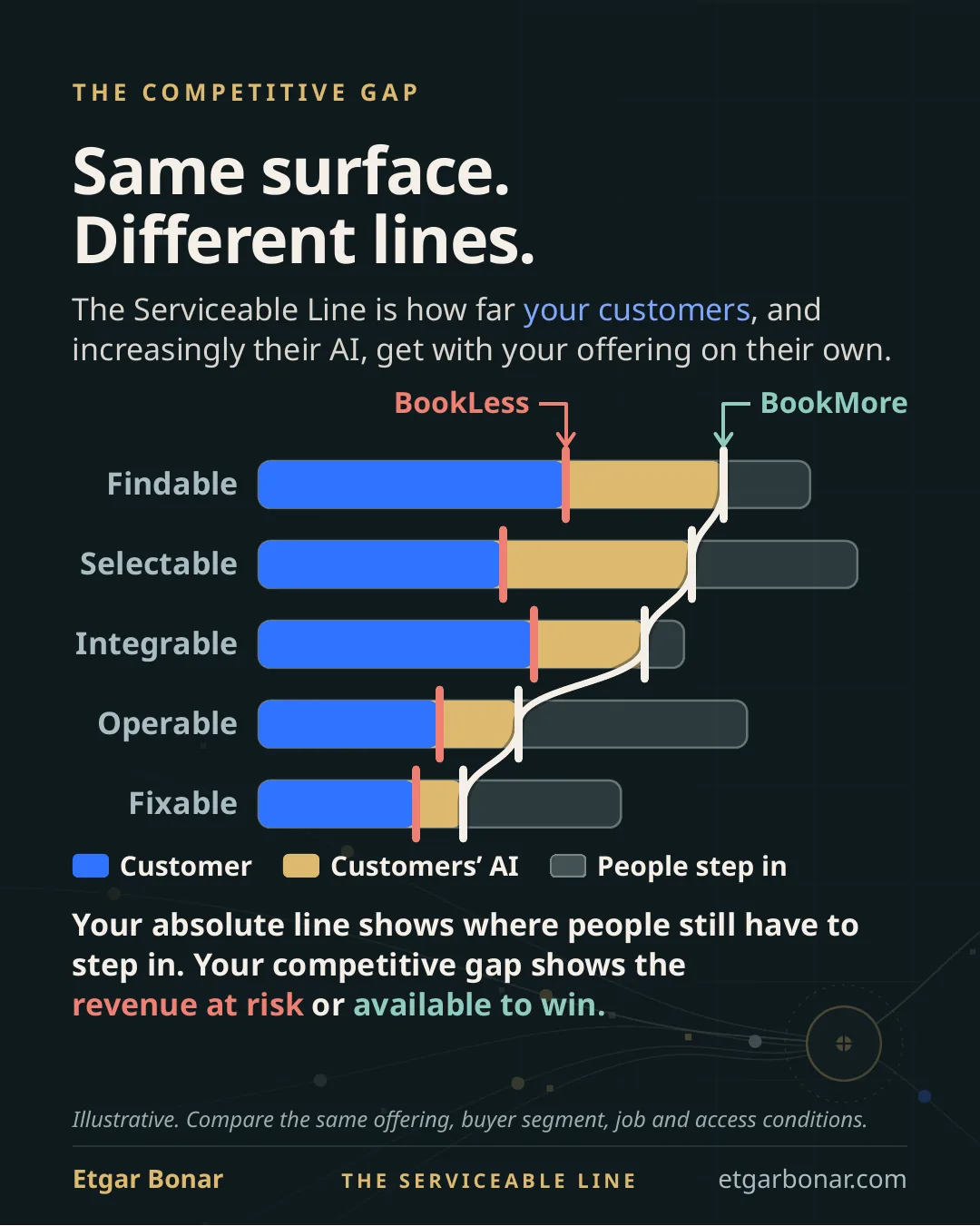
The Serviceable Line is how far your customers, and increasingly their AI, get with your offering on their own. This example follows one traveler through all five places where that work can stop.
BookLess and BookMore are fictional. Keep the traveler, trip, job and access conditions the same. The only difference is how far each platform lets the traveler’s AI get without one of its people stepping in.
The walkthrough
From being found to recovering when something breaks
Move through the nine pages with the arrows, the dots, your keyboard or a swipe.
1 / 9
Use the arrows or arrow keysSwipe or use the arrows
Read the text version
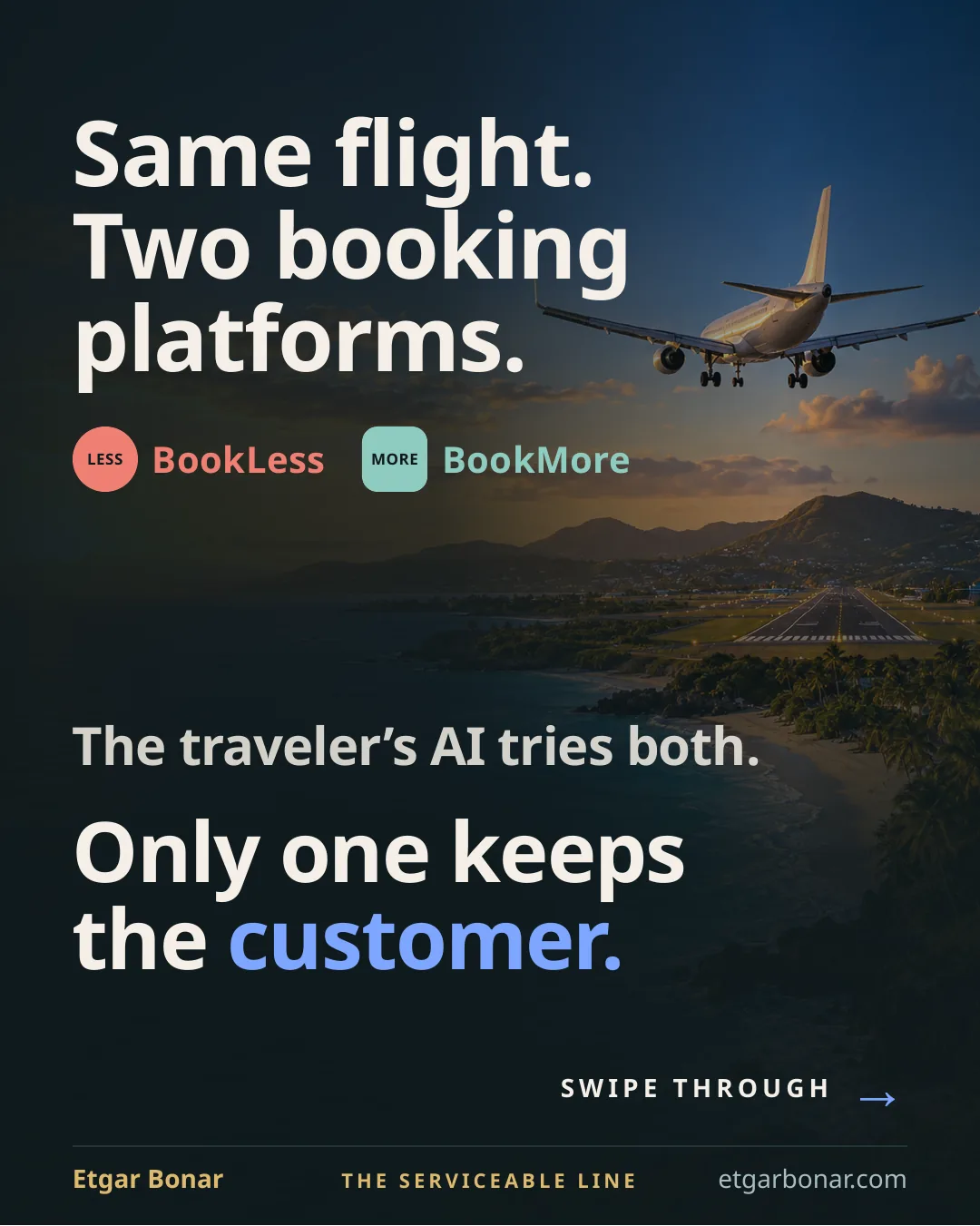
Same flight. Two booking platforms.
The traveler’s AI tries both. Only one keeps the customer.
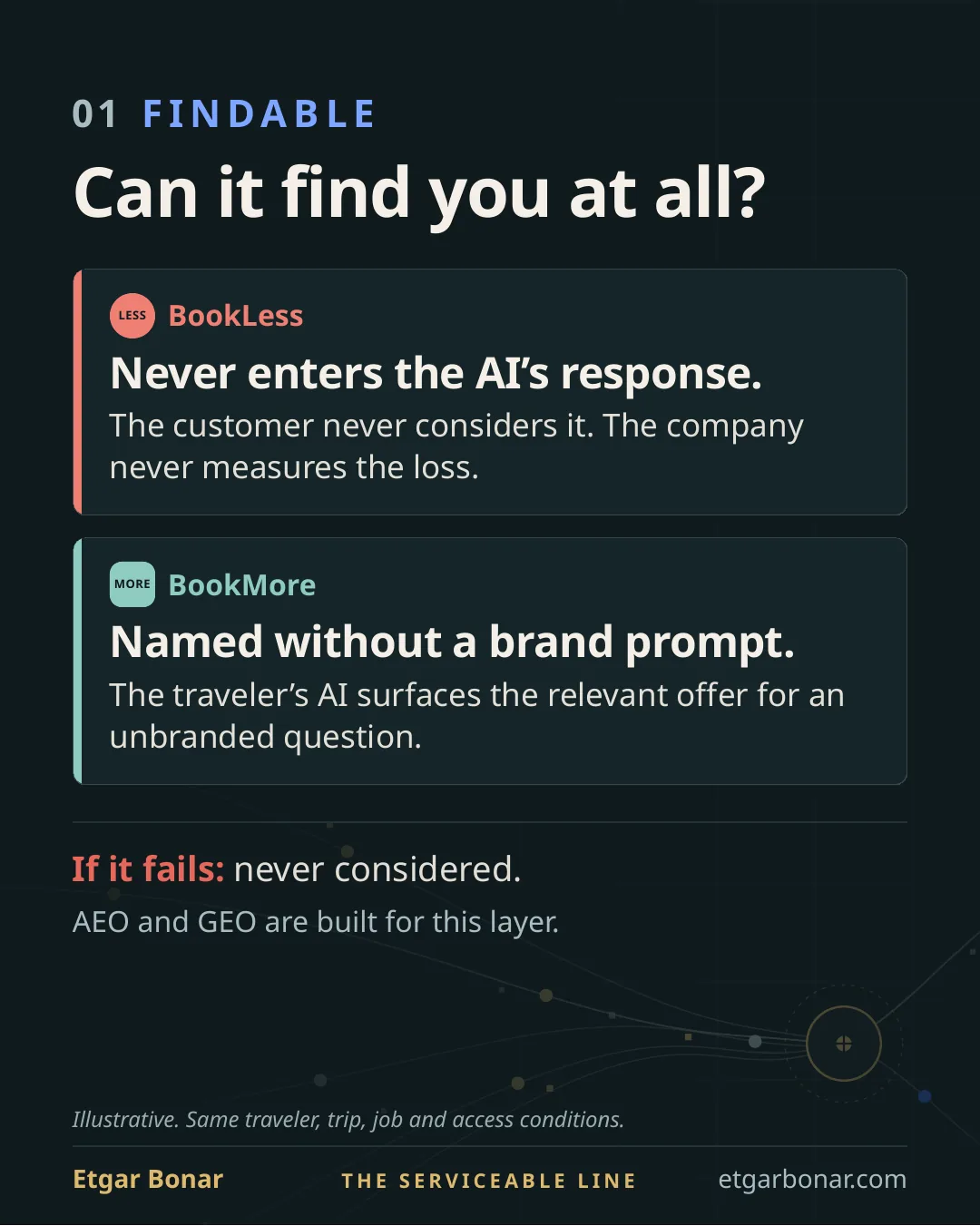
Findable: Can it find you at all?
BookLess: Never enters the AI’s response. The customer never considers it. The company never measures the loss.
BookMore: Named without a brand prompt. The traveler’s AI surfaces the relevant offer for an unbranded question.
If it fails: never considered. AEO and GEO are built for this layer.
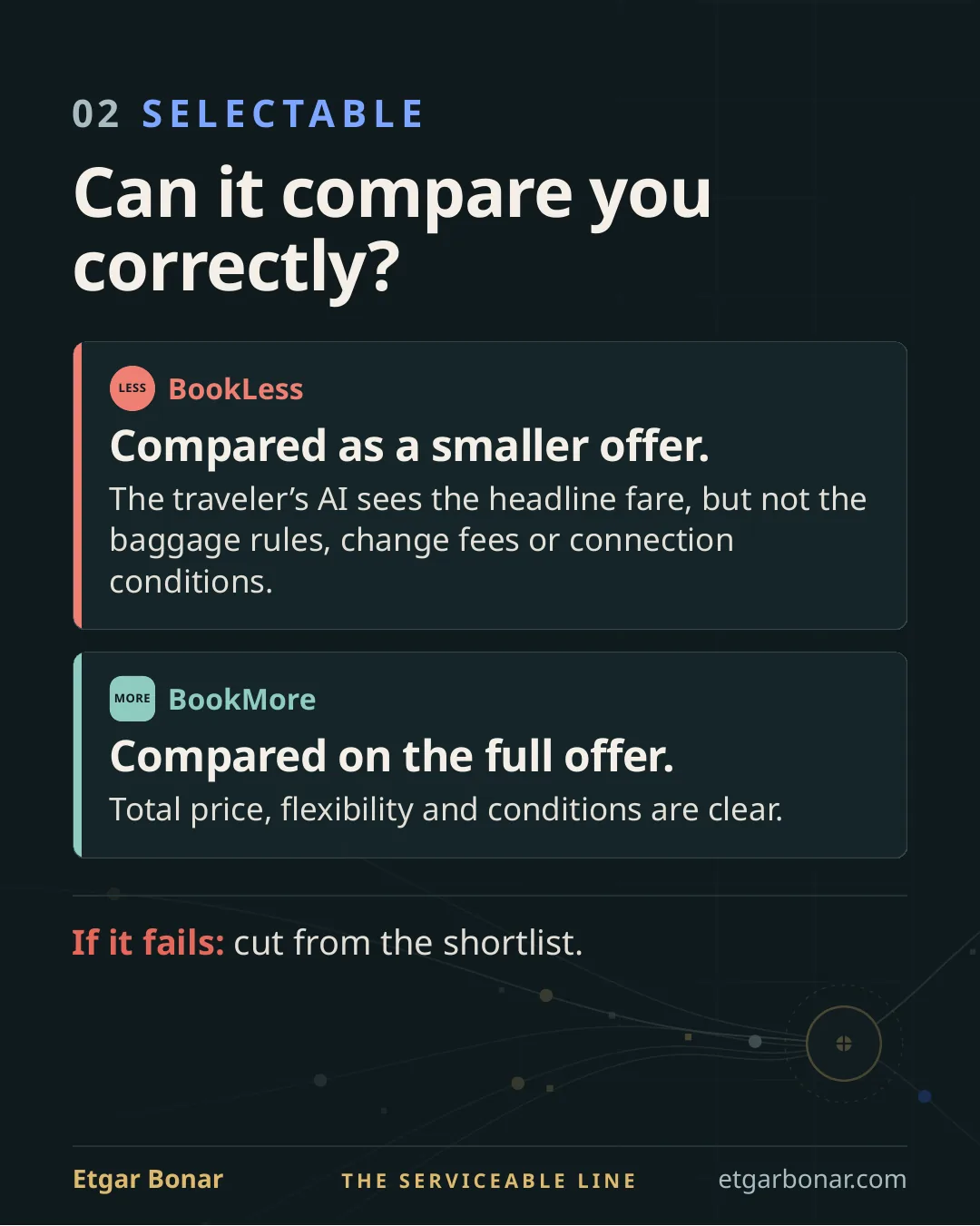
Selectable: Can it compare you correctly?
BookLess: Compared as a smaller offer. The traveler’s AI sees the headline fare, but not the baggage rules, change fees or connection conditions.
BookMore: Compared on the full offer. Total price, flexibility and conditions are clear.
If it fails: cut from the shortlist.
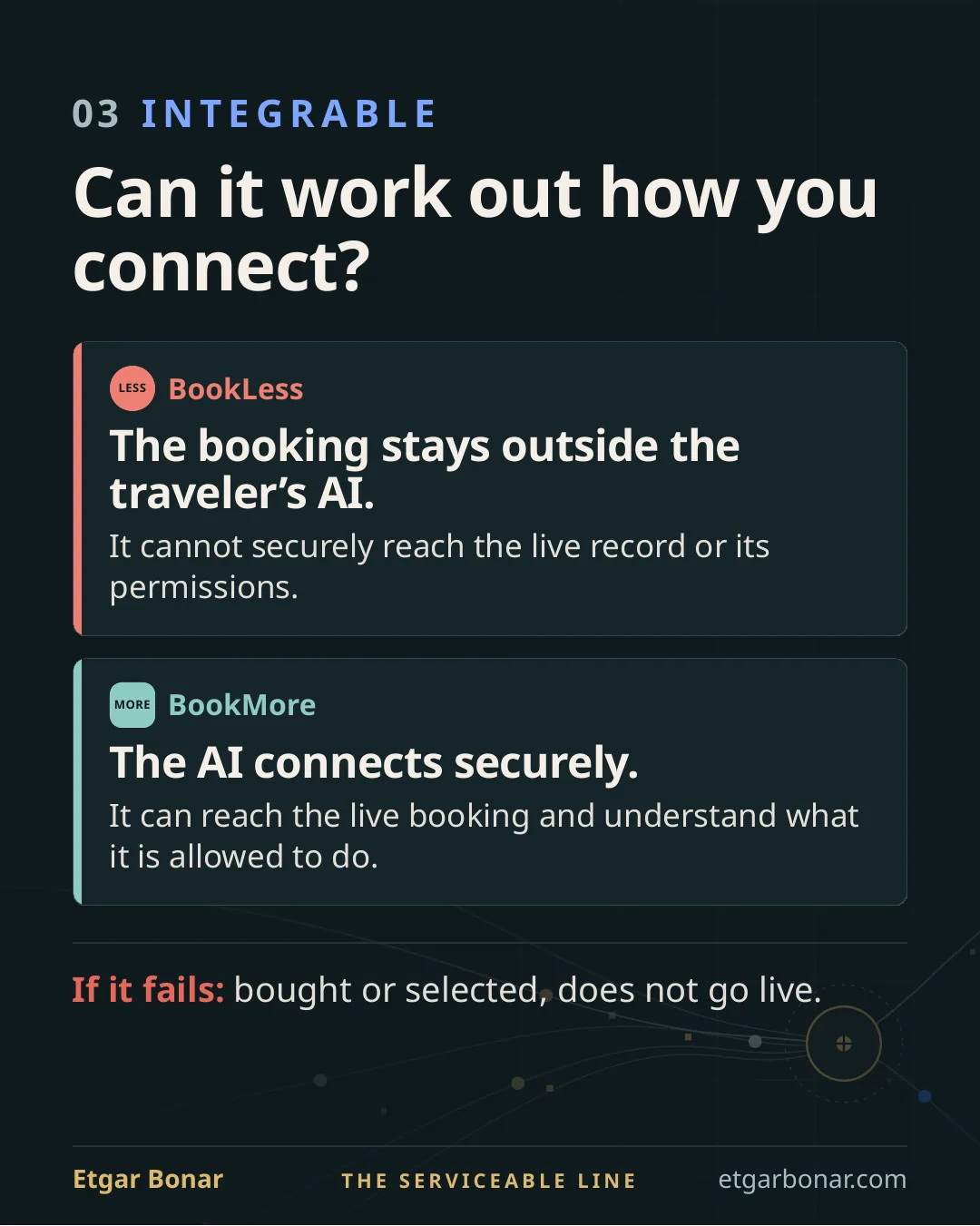
Integrable: Can it work out how you connect?
BookLess: The booking stays outside the traveler’s AI. It cannot securely reach the live record or its permissions.
BookMore: The AI connects securely. It can reach the live booking and understand what it is allowed to do.
If it fails: bought or selected, does not go live.
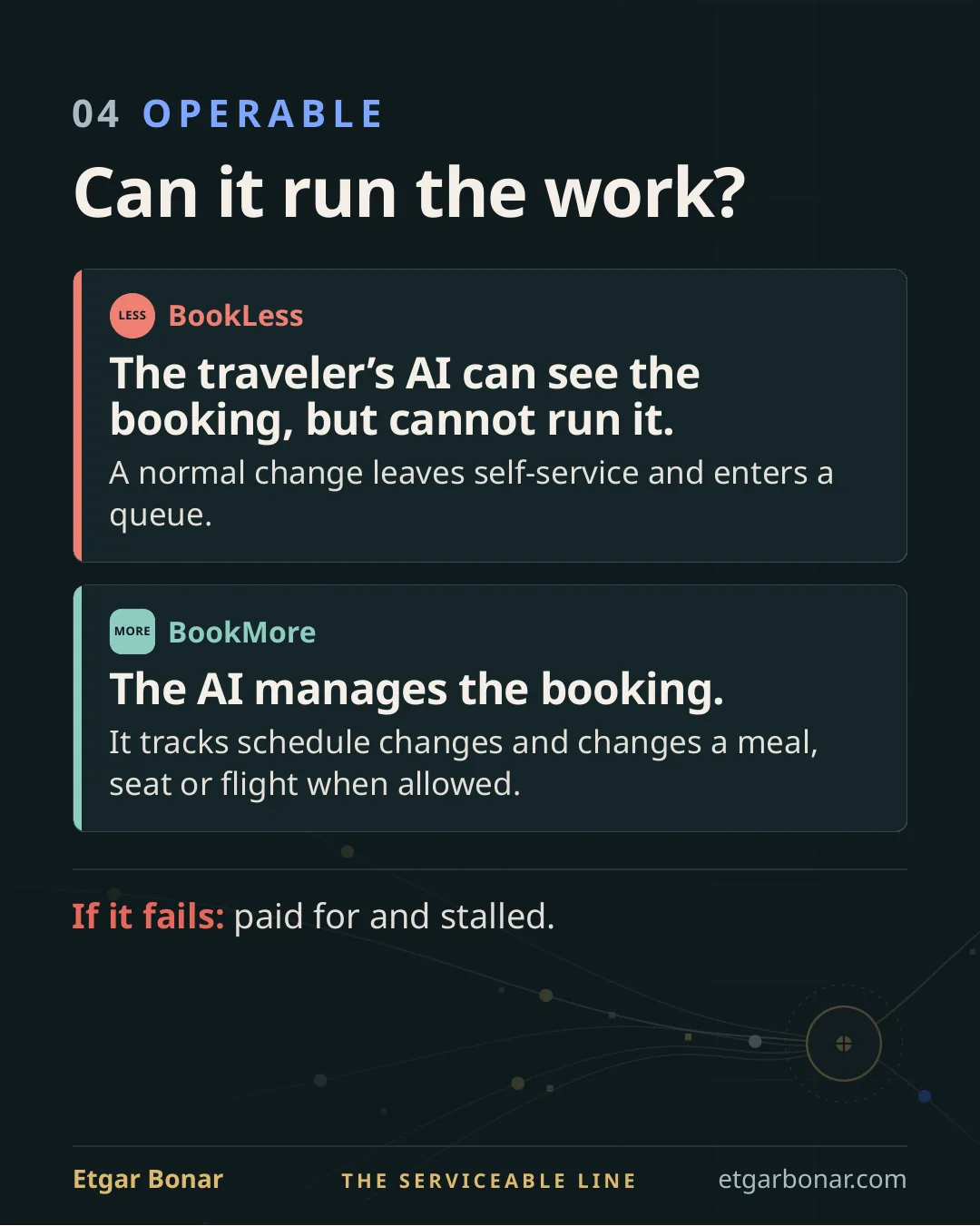
Operable: Can it run the work?
BookLess: The traveler’s AI can see the booking, but cannot run it. A normal change leaves self-service and enters a queue.
BookMore: The AI manages the booking. It tracks schedule changes and changes a meal, seat or flight when allowed.
If it fails: paid for and stalled.
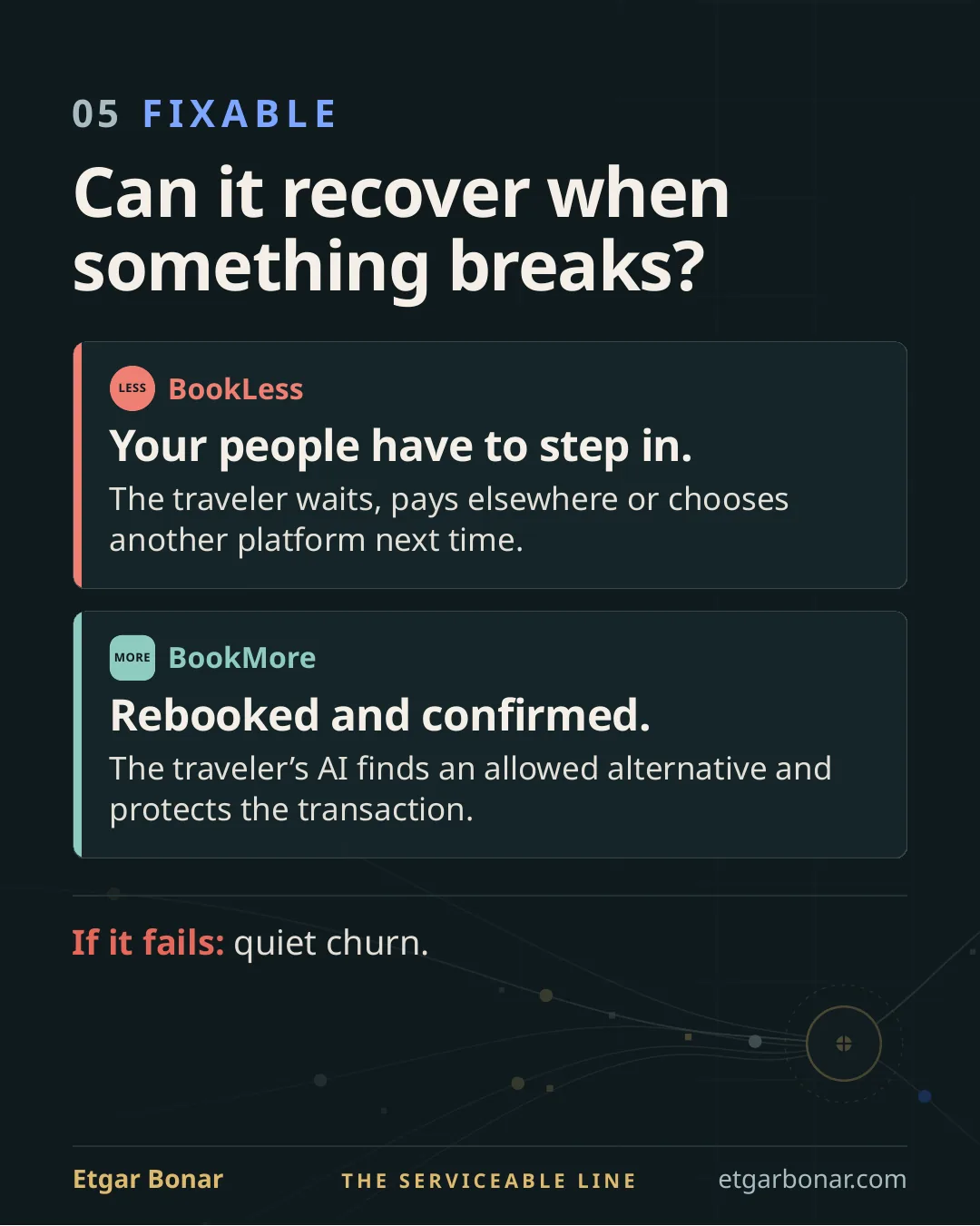
Fixable: Can it recover when something breaks?
BookLess: Your people have to step in. The traveler waits, pays elsewhere or chooses another platform next time.
BookMore: Rebooked and confirmed. The traveler’s AI finds an allowed alternative and protects the transaction.
If it fails: quiet churn.
The competitive gap
Same surface. Different lines. Your absolute line shows where people still have to step in. Your competitive gap shows the revenue at risk or available to win.
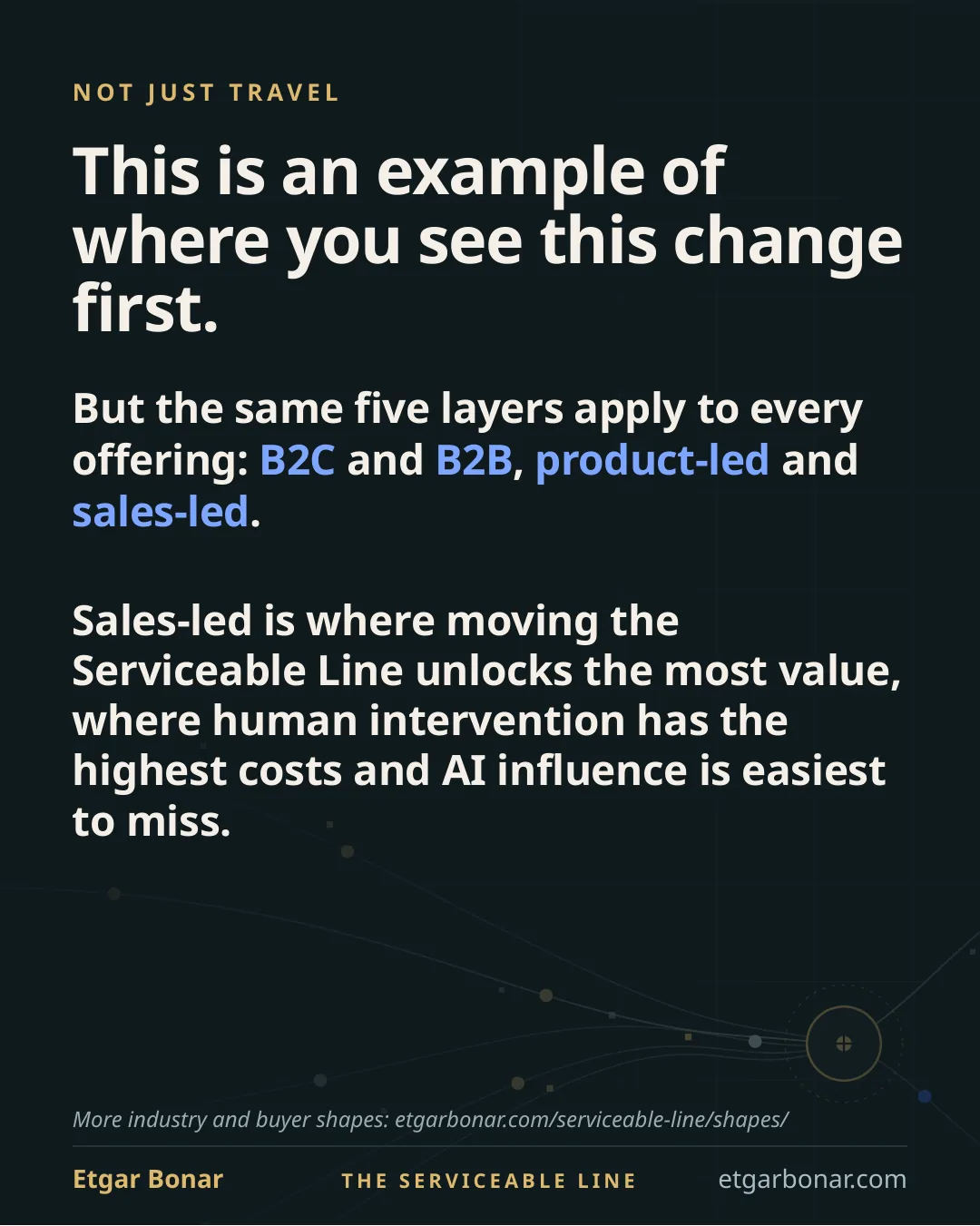
Not just travel
The same five layers apply to every offering: business-to-consumer and business-to-business, product-led and sales-led. Sales-led is where moving the Serviceable Line unlocks the most value, where human intervention has the highest costs and AI influence is easiest to miss.
What this example shows
The line is a commercial difference, not a technology score
A short line is not automatically bad, and a long line is not automatically good. What matters is whether another provider lets the same buyer, with the same job and access, get farther. That difference appears as lost consideration, slower activation, higher service costs or churn.
The flight is one illustration. The five questions apply to consumer and business markets, product-led and sales-led motions, software, services and physical products. The work changes; the diagnostic does not.